
Construction Lawyer & Building Solicitors Sydney | Contracts Specialist Law Firm

NSW 2009, Australia

100 Harris St, Pyrmont

24/7 Customer Support

Mon - Fri: 8:00 - 18:00

You can contact us during the above work hours.

NSW 2009, Australia

c/o Clarence 65 York St

Mon - Fri: 8:00 - 18:00

You can contact us during the above work hours.

Variations in Building Contracts in NSW: How to Handle & Resolve Disputes

Variations Under Fair Trading Contracts: NSW Homeowner's Guide

Understand your rights when your builder requests contract variations during construction.

You can be confident that you are getting the right legal advice.

Building contract variations can protect your interests or create costly disputes. Learn what variations are, how they're properly made under NSW Fair Trading contracts, and when you need legal protection before signing variation agreements.

Get a Fixed-Fee Quote Now

How to Tell if There Are Variations

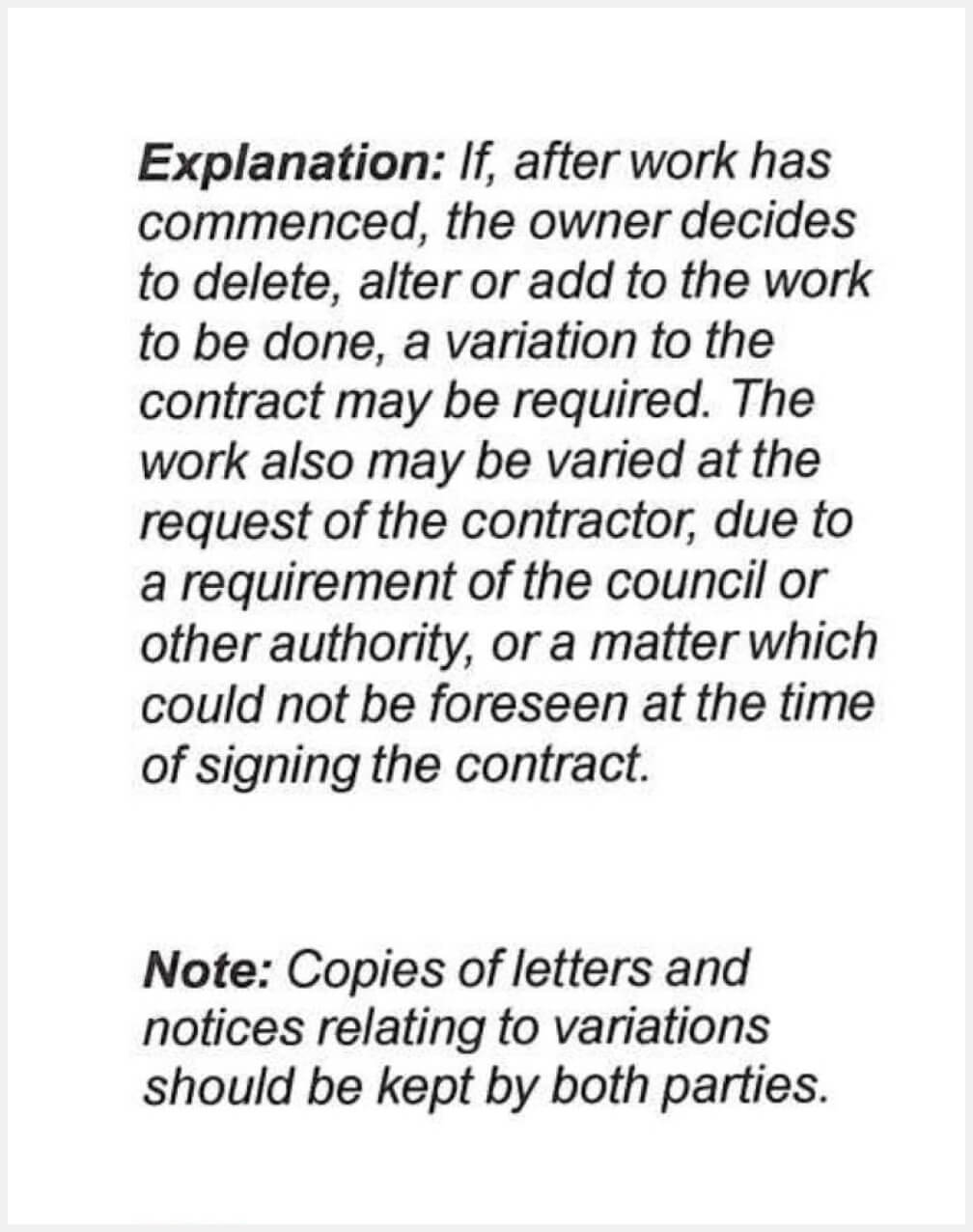
Variations include changes to, or deviations from, the Plans and Specifications outlined in your original building contract. These changes can affect multiple aspects of your project and may impact both the timeline and final cost.

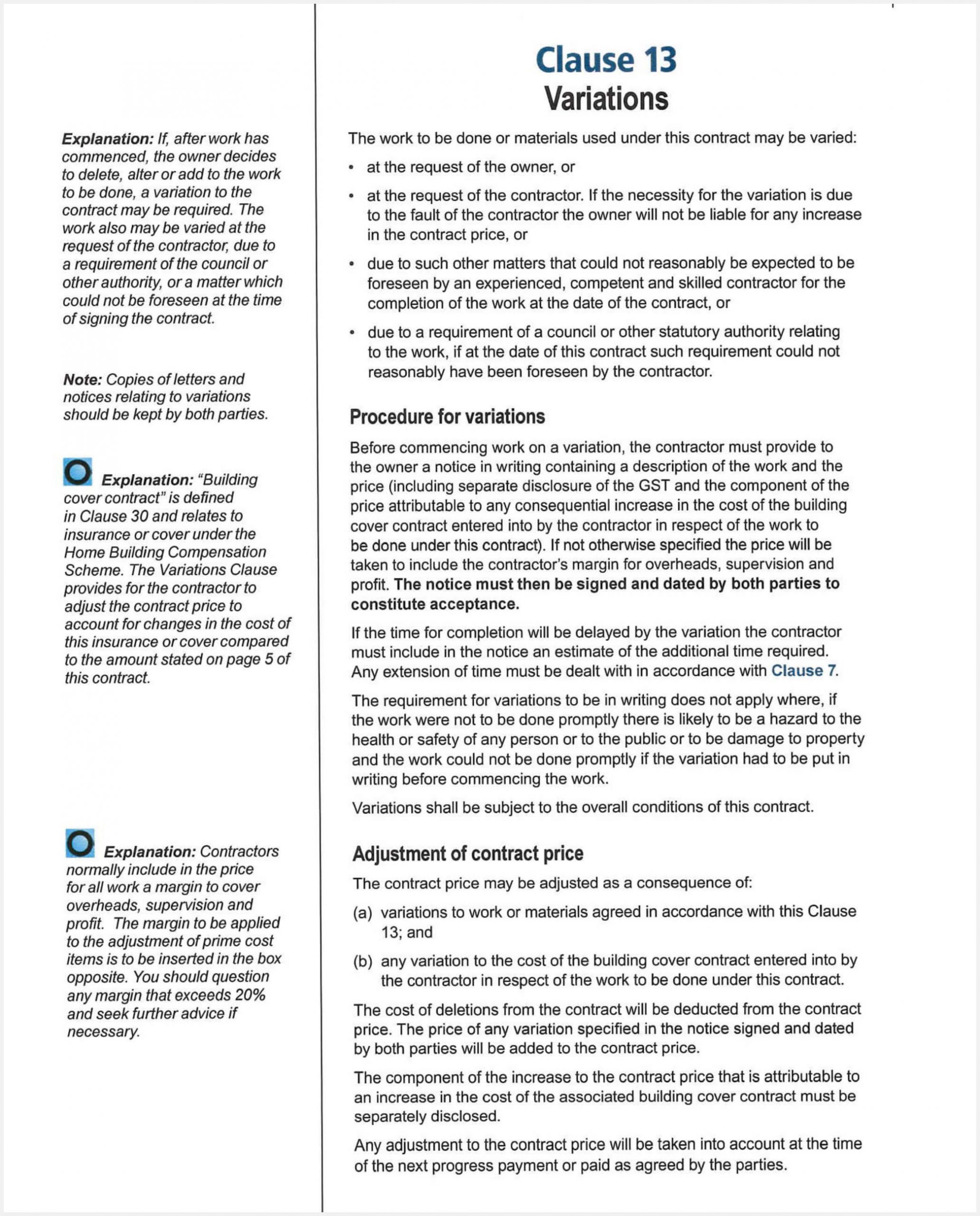
Under Clause 13 of the Fair Trading contract, variations must be documented in writing and signed by both parties before work commences.

Contract variations may include changes to the:

  • Design specifications and architectural plans under the original building contract
  • Materials specified in the contract
  • Quantities of materials or work scope
  • Quality standards and finishes
  • Work sequence and construction methodology
  • Additional materials and installations not in original scope
  • Additional work required to comply with government regulations
  • Price of materials due to market changes (Prime Cost and Provisional Sum variations)
  • Omissions from the original scope of works
  • Additional certification and design requirements
  • Changes to approved building plans
  • Additional insurance requirements
  • Additions to the original scope of works

In NSW, the most common variations that occurred during home building in 2021 are, in order of frequency:
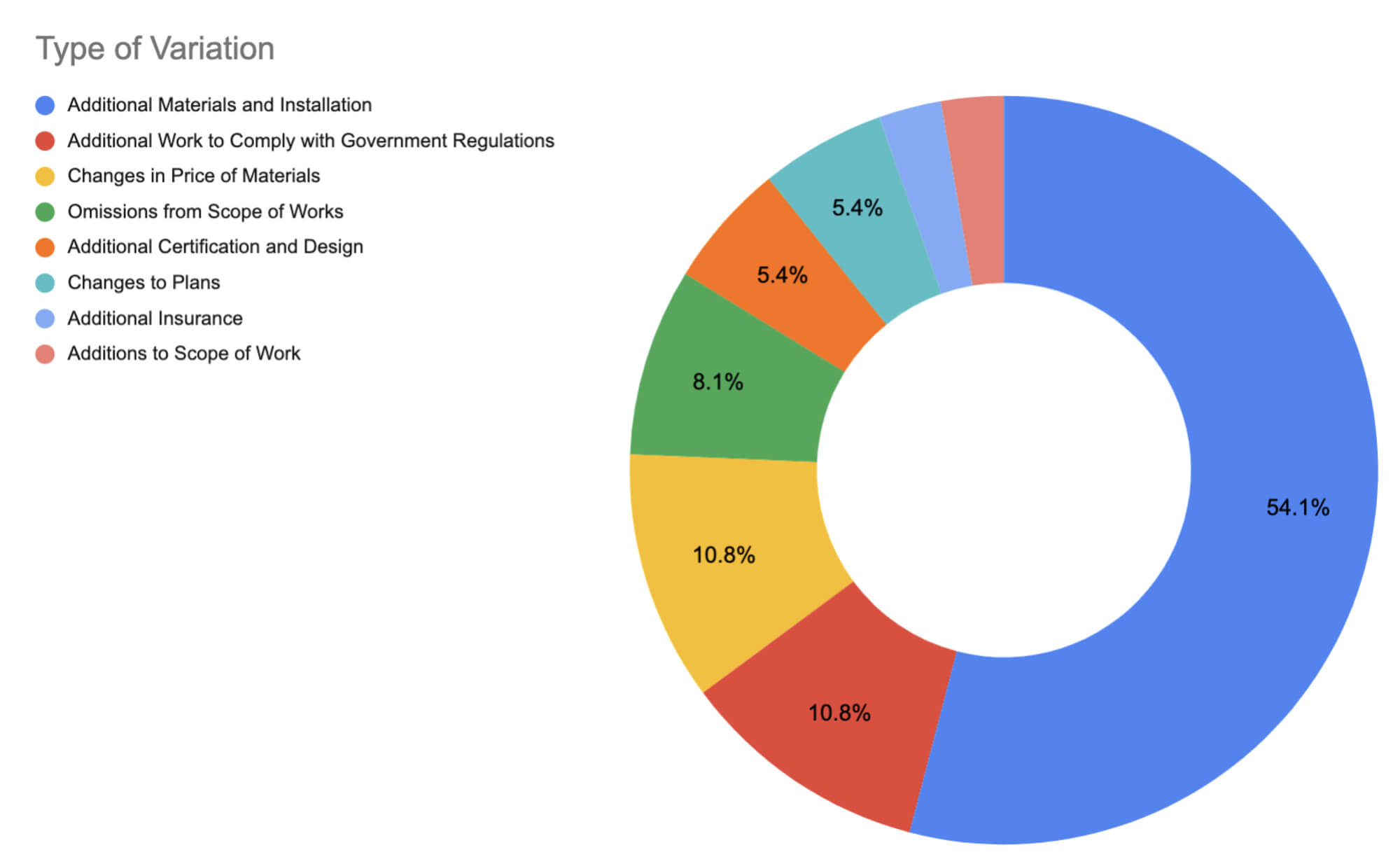
Types of construction variations in NSW building projects

Are Variations Always a Bad Thing?

Building contract variations in NSW
For illustration purposes only.

No. Variations are not inherently bad or evidence of problems with your building project. Variations may be perfectly acceptable, provided that both parties agree on the change and follow the proper procedure for making variations under your NSW Fair Trading contract.

In fact, homeowners frequently request variations even after the contract has been signed. You may decide to upgrade finishes, add features, or modify designs as construction progresses. The key is ensuring all variations follow the correct legal process outlined in your contract.

Problems arise when variations are not properly documented, when pricing is unclear, or when work proceeds without your written consent. Under NSW building law, unsigned variations are unenforceable and may not be payable to your builder. Understanding the proper variation procedure protects both you and your builder.

How Variations May Be Properly Made Under NSW Law

The procedure for requesting variations is specifically laid out in Clause 13 of your NSW Fair Trading building contract. This clause establishes the legal requirements that both you and your builder must follow.

If your builder or contractor wants to deviate from the original plans and implement variations, they are legally required to send you a written notice containing:

  • A clear description of the proposed variation work
  • The price impact (increase or decrease) of the variation
  • How the variation affects the contract timeline
  • Any other relevant impacts on the contract

The variation will only be considered legally accepted if both you and your builder sign and date the written notice. This written notice requirement protects homeowners from unauthorised building work and unexpected cost increases during construction. Verbal agreements or unsigned variations are not enforceable under NSW law and can lead to serious disputes.

Never allow work to proceed on variations until you have received, reviewed, and signed the formal variation notice. If you're uncertain about a proposed variation, you have the right to seek independent legal advice before signing. Our contract review service can assess variation notices to ensure they're fair and properly documented.

Fair Trading building contract variations clause NSW
For illustration purposes only.

Common Types of Fair Trading Contract Variations in NSW

Understanding the most frequent variation types helps NSW homeowners recognise when proper Clause 13 procedures must be followed during residential construction projects.

Variation Type 1: Prime Cost and Provisional Sum Adjustments - Prime Cost (PC) items and Provisional Sums are allowances in your contract for items not yet selected or priced at contract signing. When you select the actual product or the actual cost becomes known, variations occur if the actual cost differs from the allowance. Builders must provide written variation notices showing the price difference before proceeding with installation.

Variation Type 2: Design Changes Requested by Homeowner - After contract signing, homeowners frequently request design modifications such as additional windows, altered room layouts, upgraded fixtures, or structural changes. These owner-initiated variations require the builder to provide written quotations including labour, materials, and timeline impacts before work commences.

Variation Type 3: Compliance with Building Regulations - Sometimes during construction, certifiers or building surveyors identify work that must be modified to comply with the Building Code of Australia, Australian Standards, or local council requirements. These compliance variations must still follow Clause 13 procedures with written notices, even though the work is mandatory.

Variation Type 4: Site Condition Discoveries - Unexpected site conditions such as rock, poor soil, asbestos, or underground services discovered during excavation often require variations for additional work. Builders must document these conditions with evidence and provide written variation quotes before proceeding with remedial work.

Variation Type 5: Material Availability and Substitutions - When specified materials become unavailable due to supply chain issues or discontinuation, builders must propose substitute materials through formal variation notices. The notice must detail the substitute product specifications and any price difference from the original specification.

When Do Variations Become a Problem?

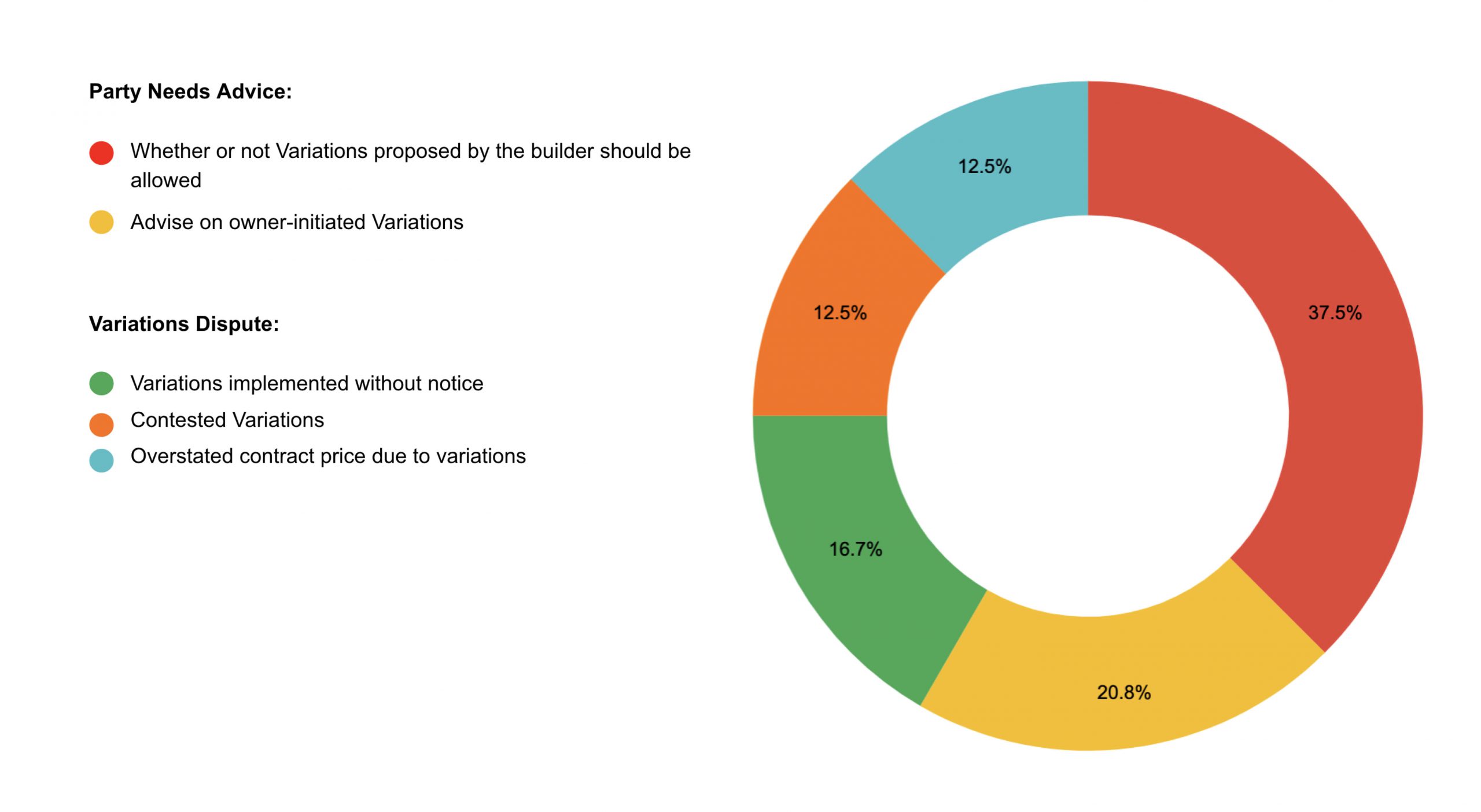
Variations become serious problems when the proper procedures outlined in Clause 13 are not followed. The most common issues arise in these situations:

Unauthorised Work: Sometimes builders proceed with changes without first notifying the homeowner in writing, as required by the contract. Under NSW Home Building Act 1989, unauthorised variations may constitute a breach of contract and grounds for dispute resolution. Homeowners are then shocked to receive invoices with significant price increases for work they never formally approved.

Deadlock Situations: Disputes often reach deadlock because one party refuses to sign the proposed variation, or one party needs time to seek independent advice before agreeing to the proposed changes.

Pricing Disputes: Even when variations are properly documented, disagreements about fair pricing for the variation work can create conflict between homeowners and builders.

Cumulative Cost Impact: Multiple small variations can accumulate into substantial cost increases that exceed your budget, particularly if each variation wasn't carefully reviewed before approval.

These problems can escalate quickly into formal building disputes requiring tribunal intervention. Understanding your rights and ensuring proper variation procedures are followed can prevent costly disputes.

Fair Trading contract variations dispute NSW

Protecting Yourself from Unfair Variation Claims

NSW homeowners can take specific steps to prevent variation disputes and protect themselves from unexpected costs during building projects under Fair Trading contracts.

Protection Step 1: Review Variation Notices Carefully Before Signing - Never sign variation notices under pressure or without fully understanding the scope and cost implications. Take time to review the detailed description of work, compare pricing against industry standards, and assess the impact on your overall project budget. You have the right to seek independent advice before accepting any variation.

Protection Step 2: Request Detailed Cost Breakdowns - Under Clause 13, builders must provide variation pricing, but the clause doesn't specify the level of detail required. Request itemised breakdowns showing labour costs, material costs, and profit margins for variations exceeding $1,000. Detailed breakdowns help you assess whether pricing is reasonable and identify any inflated charges.

Protection Step 3: Document All Variation Communications in Writing - Even if your builder discusses variations verbally on site, follow up with written emails confirming what was discussed and requesting formal written variation notices. Written records create evidence trails essential for dispute resolution if disagreements arise later about what was agreed.

Protection Step 4: Track Cumulative Variation Costs Against Budget - Maintain a running spreadsheet of all signed variations and their cost impacts throughout your project. Multiple small variations can accumulate into substantial budget overruns. Tracking cumulative costs helps you make informed decisions about accepting additional variations and alerts you when you're approaching your budget limits.

Protection Step 5: Get Legal Review for Significant Variations - For variations exceeding 10% of your original contract price or involving significant structural changes, obtain independent legal advice before signing. Construction lawyers can assess whether the variation is reasonably necessary, whether pricing is fair, and whether you have grounds to negotiate or refuse the variation.

What to Do When Variations Develop Into Disputes

Fair Trading contract building dispute resolution clause
For illustration purposes only.

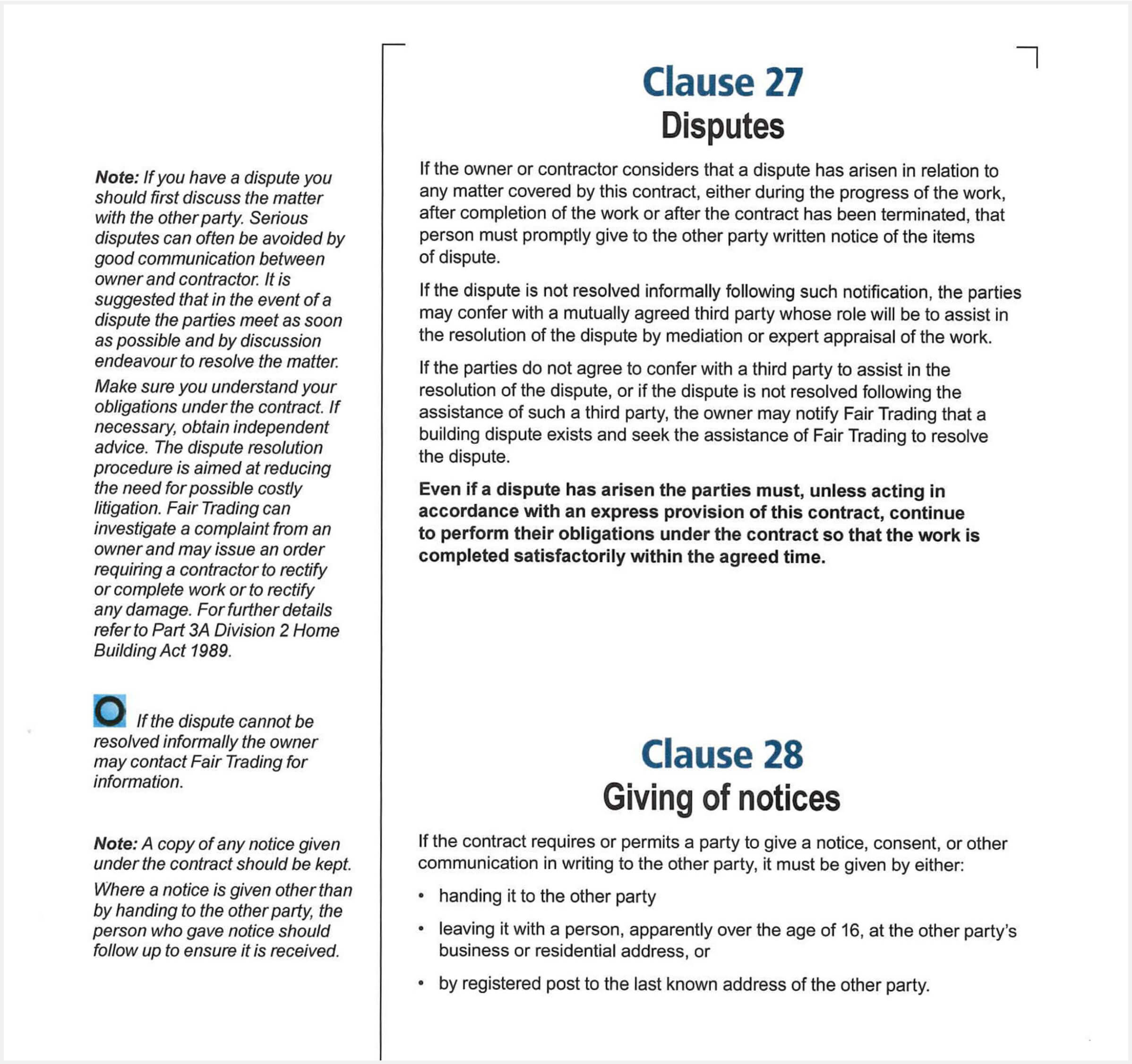
If variations turn into a problem, you should refer to the Dispute Resolution clause in your NSW Fair Trading contract. This clause lays out the mandatory steps you must take to resolve the issue before proceeding to formal tribunal action.

Step 1: Internal Negotiation: The first step normally involves negotiating directly with your builder or contractor and attempting to settle the dispute internally. Keep detailed records of all variation requests, quotes, and correspondence as evidence for potential tribunal proceedings. Document all communications in writing during this stage.

Step 2: Mediation: If the issue remains unresolved through direct negotiation, the contract typically requires referral to mediation. Mediation is a structured negotiation process facilitated by an independent mediator who helps both parties reach agreement.

Step 3: Legal Advice: During the internal negotiation and mediation stages, obtaining independent legal advice about your rights and the strength of your position is crucial. Our construction law expertise can clarify your legal position and options.

Many variation disputes can be resolved through these early dispute resolution steps without proceeding to tribunal or court, saving significant time and legal costs. However, understanding your legal rights from the beginning strengthens your negotiating position.

If the Variations Issue Persists: Tribunal and Court Options

When internal negotiation and mediation fail to resolve your variation dispute, formal legal remedies are available through NSW regulatory bodies, tribunals, and courts.

NSW Fair Trading: Further recourse may be pursued through NSW Fair Trading, where the parties may be instructed to undergo formal Alternative Dispute Resolution (ADR). NSW Fair Trading can investigate building complaints and facilitate resolution between homeowners and builders.

NCAT (NSW Civil and Administrative Tribunal): If the issue remains unresolved at the NSW Fair Trading level, you can lodge a building claim with NCAT's Consumer and Commercial Division. NCAT has jurisdiction over building contract disputes including variation disagreements, with claims up to $500,000 in the Home Building Division. NCAT handles building disputes including variation disputes, defects claims, and contract breaches. Your matter will undergo directions hearings where procedural orders are made, followed by a final hearing where a tribunal member decides the dispute.

Court Proceedings: If the dispute remains unresolved after NCAT, or if the tribunal's decision is unsatisfactory to either party, appeals may be sought in the NSW Court system (District Court or Supreme Court depending on the claim value and complexity).

Tribunal and court proceedings require detailed evidence, legal submissions, and understanding of building law and procedure. Our 17+ years of NCAT experience and construction law expertise ensures your variation dispute is properly prepared and presented.

How Our Construction Law Expertise Protects You

Variation disputes can escalate quickly and create significant financial exposure for NSW homeowners. Our specialist construction law service helps you understand your rights, assess proposed variations before signing, and resolve disputes efficiently.

Early Contract Review: Before signing your building contract, we review the variation clause to ensure you understand your rights and obligations. We identify unfair Clause 13 terms that give builders excessive variation rights or unclear pricing mechanisms that could expose you to cost blowouts. We identify any unfair terms that could disadvantage you when variations arise during construction.

Variation Assessment: When your builder proposes variations, we can review the variation notice to assess whether the pricing is reasonable, whether the variation is necessary, and whether you're legally obligated to accept it. Our assessment includes comparing variation quotes against industry pricing standards and identifying whether the variation results from builder errors versus legitimate unforeseen circumstances.

Dispute Resolution Support: If a variation dispute develops, we provide clear advice on your legal position, represent you in negotiations and mediation, and handle NCAT proceedings with our extensive tribunal experience.

Fixed-Fee Transparency: Unlike many law firms that bill hourly, we provide fixed-fee quotes for defined services, giving you cost certainty from the beginning.

With over 17 years of exclusive construction law practice in NSW, daily NCAT experience, and deep industry knowledge from roles including former Divisional President of the Master Builders Association NSW, we understand both the legal and practical aspects of building contract variations.

Don't wait until a small variation disagreement becomes an expensive tribunal dispute. Get expert advice early to protect your interests and budget.

Fair Trading Contract Variations Lawyer NSW

Your Contract Reviewed by an Expert Construction Lawyer

John Dela Cruz, Principal Lawyer at Contracts Specialist

When you submit your building contract, it's reviewed personally by John Dela Cruz — Principal Lawyer at Contracts Specialist with over 17 years of exclusive construction law experience.

John is an Australian Legal Practitioner and he services NSW, Queensland, Victoria, and Tasmania. He has dedicated his entire legal career to specialise on construction law. As a former Divisional President of the Master Builders Association NSW, he combines deep legal expertise with comprehensive industry knowledge. He maintains daily experience in building dispute tribunals (NCAT, VCAT, QCAT) and courts across multiple jurisdictions.

Unlike generalist lawyers who handle various legal matters, John specialises exclusively in residential building contracts and homeowner protection. Your contract review focuses on identifying unfair terms, clarifying your legal obligations, and protecting you from costly mistakes before you sign.

Frequently Asked Questions About Fair Trading Contract Variations

Clause 13 is the variations clause in NSW Fair Trading building contracts. It sets out the legal procedure that must be followed when either party wants to make changes to the original contract scope, specifications, or price. The clause requires written notice describing the variation work and price impact, and requires both parties to sign before the variation becomes legally binding.
No. Under NSW law, variations require your written consent. Your builder cannot force you to accept variations unless they fall into specific categories like changes required by law or government regulations. However, if you unreasonably refuse necessary variations, this may affect your legal position. If you're uncertain whether a proposed variation is reasonable, seek independent legal advice before responding.
If your builder proceeds with variation work without obtaining your written approval as required by Clause 13, they may not be entitled to payment for that work. You are not legally obligated to pay for unauthorised variations. However, these situations can become complex, particularly if you benefited from the work or didn't object when you became aware of it. Document everything and seek legal advice immediately.
Assessing whether variation pricing is fair requires understanding construction costs, the scope of variation work, and industry standards. Factors include: labour and material costs, complexity of the work, impact on project timeline, and comparison to similar work pricing. Our construction law service can review variation quotes to assess whether pricing is reasonable and whether you should negotiate or seek alternative quotes.
Yes. Homeowners frequently request variations after contract signing to upgrade finishes, add features, or modify designs. The same Clause 13 procedure applies - your builder must provide written notice of the variation with pricing, and both parties must sign before work proceeds. Be aware that variations you request may affect your builder's obligations regarding completion dates and may have cost implications beyond the direct variation price.
Follow the dispute resolution process in your contract: first, attempt to negotiate directly with your builder in writing. If negotiation fails, proceed to mediation as outlined in your contract. During these stages, obtain independent legal advice about your rights and position. If the dispute remains unresolved, you can lodge a claim with NCAT. Document all communications and keep copies of all variation notices, quotes, and correspondence.
Yes. Having your contract reviewed before signing is the most effective way to prevent variation disputes. A construction lawyer can explain your rights and obligations under Clause 13, identify any unfair variation terms, and ensure you understand the full financial and legal implications of how variations will be handled during your project. This early advice prevents expensive disputes and gives you confidence in your contract.

Get Your NSW Building Contract Reviewed Before You Sign

Don't sign your Fair Trading building contract without understanding your rights regarding variations. Our specialist contract review service identifies unfair variation clauses, explains your legal obligations, and protects you from costly disputes.

What You Get:

  • Expert review of your contract's variation clause (Clause 13)
  • Clear explanation of your rights when builders request variations
  • Identification of unfair terms that could expose you to unlimited variation costs
  • Fixed-fee pricing with no hidden charges
  • Review delivered within 2 business days of payment

How It Works:

  1. Submit Your Contract - Upload your building contract through our secure online form
  2. Receive Fixed-Fee Quote - Get transparent pricing within 24 hours
  3. Expert Review Delivered - Receive your detailed contract review via email within 2 business days

Protect yourself from unfair variation terms before you sign.

Why Choose Contracts Specialist:

  • 17+ Years Construction Law Expertise - Exclusive focus on NSW building contracts and homeowner protection
  • Daily NCAT Experience - Extensive tribunal experience resolving building disputes including variation claims
  • Former MBA President - Deep industry knowledge combined with legal expertise
  • Fixed-Fee Transparency - Know your cost upfront with no billing surprises
  • Principal Lawyer Review - Your contract reviewed personally by John Dela Cruz, not junior lawyers
  • Fast Turnaround - Contract review delivered within 2 business days
  • Homeowner Focused - We exclusively serve homeowners, not builders

Get the legal protection you need before signing your building contract.

Variations under the Fair Trading Contract: a Home Owner’s Guide
Fill Out the Form to Download
Variations under the Fair Trading Contract: a Home Owner’s Guide
The Complete Handbook for Homeowners: Navigating Construction Law in New South Wales

If you’re a homeowner in New South Wales, it’s crucial to understand Construction Law to protect your investment. This ultimate guide to Construction Law is specifically designed to provide homeowners with essential insights into the legal landscape of home building in NSW.

The Complete Handbook for Homeowners: Navigating Construction Law in New South Wales

If you’re a homeowner in New South Wales, it’s crucial to understand Construction Law to protect your investment. This ultimate guide to Construction Law is specifically designed to provide homeowners with essential insights into the legal landscape of home building in NSW.